

Applied electronics development and SME collaboration
The Halland competence hub in western Sweden, centred around Halmstad University, contributes to Sweden’s semiconductor ecosystem through applied electronics development, advanced testing infrastructure and close collaboration with small and medium-sized enterprises (SMEs).
The region hosts a diverse group of companies working with electronics, embedded systems and digital technologies, including companies such as HMS Networks, NIBE, Getinge and ASSA ABLOY. Many of these companies rely on semiconductor components in their products and systems and require access to specialised competence and environments where electronic systems can be developed, tested and validated.
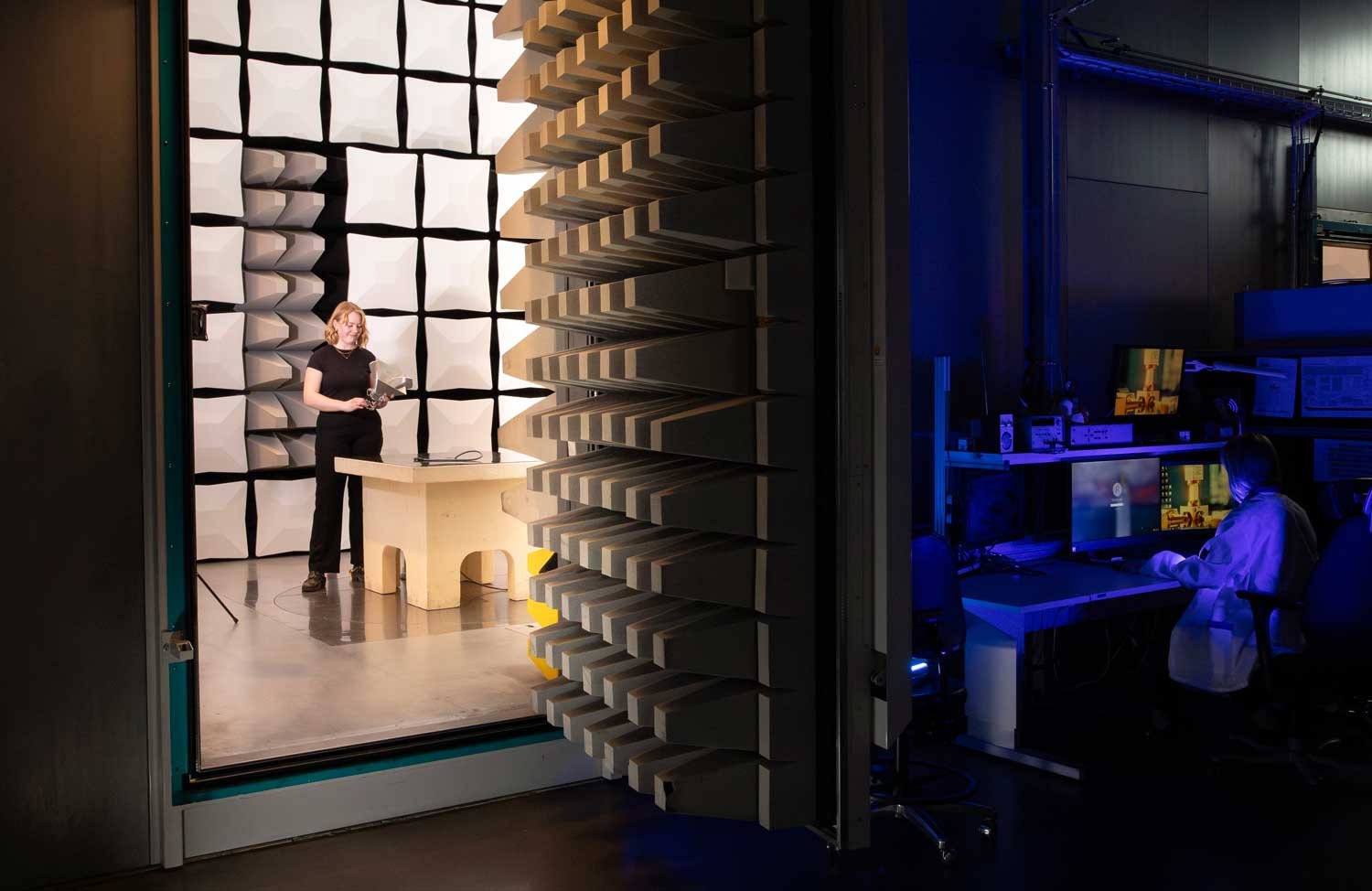
Electronics Centre in Halmstad (ECH) serves as a central platform for collaboration between academia and industry. Established in 2015 through cooperation between Halmstad University, regional companies and public actors, ECH provides a shared environment where companies, researchers and students collaborate on product development, testing and knowledge exchange.
Strengths in embedded systems and advanced testing
Halmstad University has long-standing expertise in embedded systems, real-time systems and safety-critical electronics. Research and education cover areas such as communication systems, radar technology, computer systems engineering and hardware security.
One of the hub’s distinctive assets is its advanced EMC and RF testing infrastructure, operated through ECH. These facilities allow companies to test electronic systems in demanding environments and ensure compliance with regulatory and industry standards.
For many SMEs, access to advanced testing facilities and specialist expertise is essential. By combining test environments with applied research and collaboration with students, the hub supports companies in developing reliable and competitive electronic products.
Research and collaboration
Alongside its focus on industry collaboration, the hub carries out advanced semiconductor research and development of disruptive nanoscale electronics and photonics. A key resource here is the Rydberg Laboratory (established 2004), which provides equipment for electrical, optical and structural characterisation of semiconductor materials and components. On a national arena this research strongly connects to Sweden´s largest center for Nanoscience&technology (NanoLund, Lund University) and companies e.g. IRnova and AlixLabs. The research is also strongly linked to national initiatives such as the Advanced Chip Technologies (ACT) and Centre for III-nitride technology (C3NiT) that support the ecosystem provided by the Swedish Chips Competence Centre (SCCC), launched in 2025 and funded by Vinnova and the EU, serving as the national hub for semiconductor expertise, connecting startups and industry with advanced technology, training, and pilot lines.
The regional ecosystem also includes innovation-driven companies such as Radar Reticence, a startup originating from research collaboration between Halmstad University and Linköping University that develops next-generation radar technology.
The Halmstad – Halland hub is part of national collaboration efforts within Sweden’s semiconductor ecosystem through initiatives such as Semiconductor Sweden. Through this collaboration, the hub works to strengthen connections between companies, research environments and innovation actors across the country. This helps companies in the region access expertise, infrastructure and partnerships both locally and elsewhere in Sweden.
Collaboration across the ecosystem
Collaboration between academia, industry and public actors is a defining feature of the hub. Through ECH, companies can access testing facilities, specialist competence and opportunities to collaborate with researchers and students, for example through student projects and joint development initiatives.
Regional innovation arenas, incubators and public actors also play an important role in strengthening the ecosystem and supporting companies in technology development and growth.
Future outlook
Looking ahead, the hub aims to further strengthen regional capabilities in electronics development, testing and research. Continued development of the EMC and RF testing infrastructure, combined with expanded research activities, will support companies working with increasingly complex electronic systems.
Another priority is to strengthen research within semiconductor-related technologies while expanding education and competence development within electronics and embedded systems to meet the growing demand for skilled engineers.
Through close collaboration between academia and industry, the hub will continue to support innovation among SMEs while contributing to the development of Sweden’s semiconductor ecosystem.