

Why NXP is looking to meet customers it doesn’t know yet
Europe stands at a crossroads. Shifting global dynamics, geopolitical tensions and the growing emphasis on technological sovereignty are reshaping investment decisions in the semiconductor industry and influencing how companies build their supply chains and select technology partners. At the same time, physical AI is moving decisions out of the cloud and onto the edge: into robots, drones and autonomous machines. At NXP’s first Designing with NXP events in the Nordic countries, held in Copenhagen and Stockholm, we asked where Scandinavian competence makes the biggest difference.
Why does Europe stand at a crossroads?
For Gordon Padkin, the European picture is shaped by a rapidly changing global landscape. Intensifying international competition and geopolitical developments are prompting companies to rethink their strategies and priorities. Sovereignty and physical AI are emerging as key topics. “Sovereignty is about how Europe builds its own ecosystem, so we can compete and stand on our own feet: in R&D, in capabilities and even in manufacturing and the supply chain,” says Gordon.
Adam Kalinsky sees the same shift. Customers are pushing NXP away from a globalised model driven primarily by cost, towards greater sustainability, diversified supply chains and reduced dependencies. According to Gordon, this is also changing how engineers make decisions. “Historically, engineers selected components on technical merit. Now they also have to consider whether a part will keep being supplied. In some segments, supply chain resilience and sovereignty are already a reality,” he says.
Why bring engineers together at Designing with NXP?
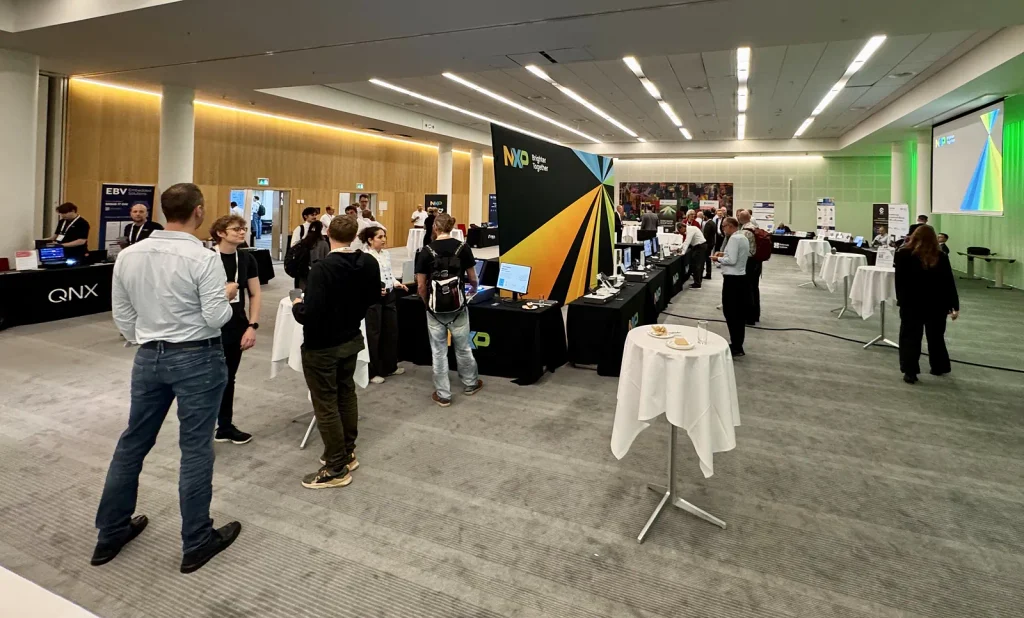
With all these shifts, NXP wants the engineers driving innovation to know how it can help them build products and capabilities. “Engineer to engineer is the best way to drive innovation,” says Adam. NXP has run tech days and similar events elsewhere in the world for several years, but this is the first time at this scale in the Nordics. The team deliberately chose a broad mix: power and energy, factory automation, medical, aerospace and defence, and home and building.
Automotive remains a core business for NXP, but the European market is changing. “The default now is not necessarily a European Car,” says Adam. NXP expects much of its growth to come from supporting the rise of Chinese Electrical Vehicle makers and the transition of German carmakers. It is also looking for growth in battery management, infrastructure and data centres, and robotics.
Why and how do the Nordic countries matter to NXP?
NXP is betting on edge AI, where robots, drones and vehicles make decisions themselves instead of relying on the cloud. “AI calculated on the edge is faster, more responsive and more responsible,” says Adam. With the acquisition of Kinara, a developer of AI chips, and its first chips now coming to market, NXP aims to offer low power with relatively high performance, whatever the machine. “Robotics is the essence of an embedded system. And the Nordics, and Sweden in particular, seem to be where a lot of those startups come from,” he says.
Gordon points to depth: a large pool of engineers, strong software and hardware experience, and companies that lead their industries. For Adam, growth lies with companies NXP may not know yet. “We need to reach beyond the traditional giants, to the customers we’ve never heard of. Suddenly it’s an AI camera for a drone, or a robotics startup right at the start of its design decisions,” he says. The Startups x NXP programme offers sponsorship and support, and NXP would like to see more Swedish startups join.
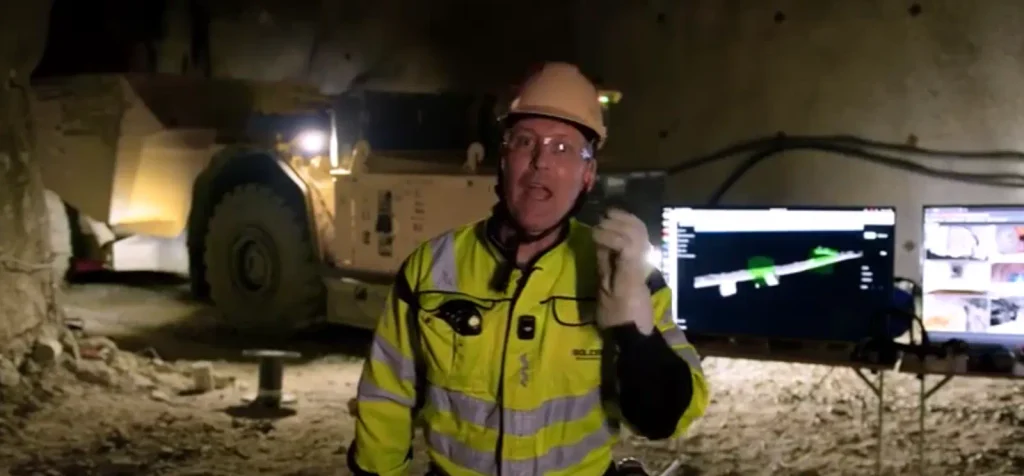
Collaboration with established Swedish industry matters just as much. In Boliden’s Kristineberg mine, 1,420 metres below the surface, Boliden, LKAB and NXP are exploring an ultra-wideband positioning system that tracks workers and vehicles where GPS can’t reach. “Making autonomous vehicles in a mine secure when people work there too is exactly the kind of big challenge we can help solve,” says Gordon. Watch the video from the mine, featuring NXP’s CTO.
What are engineers struggling with that outsiders don’t see?
Software. Gordon sees “software-defined everything” spreading from cars into industry, robot arms and physical AI. “There will be so much software and so much flexibility. The big question is how to architect it so you meet all your goals, and still deliver real-time behaviour, safety and security as one package,” he says.
Adam hears the same from customers who maintain software across many processors, suppliers and applications. “It is becoming challenging,” he says. NXP’s response is to contribute development, patches and releases to open-source operating systems backed by the Linux Foundation, and to align its tools with what younger engineers already use, such as the code editor VS Code. NXP also maintains security fixes on its Linux releases for four years. “That is only a value add. It is a must-do,” says Adam.
What does the Nordic ecosystem need next?
Gordon’s answer is integration. Growing complexity, supply challenges and the question of who owns system integration make collaboration more important than ever. “In the Nordics we have a great ecosystem and great partners. It is more about how we collectively solve the needs of embedded engineers, and help them move at the speed of software rather than hardware,” he says.
Adam wants to lift partners more into the spotlight. Locally, the event sponsors are key: specialists in user interfaces and displays, development toolchains and compilers, who bring complementary pieces around the processor. Distributors, ecosystem players and design houses all have key roles. “For example, we learn a lot from design houses about real design problems. We need to engage with them more and feed them customers.”
How will competence needs change in embedded engineering?
Adam sees a generational shift within 5-10 years, as experienced engineers retire across customers and partners. “The young people coming in have a different set of tools. How they will use AI in design, I don’t think we know yet. But it will happen quickly,” he says.
Gordon points to NXP’s STEM (science, technology, engineering and maths) programmes and corporate goals for female engineers. Attracting women engineers has always been difficult for this industry, says Adam, but NXP does quite well. What worries him more is what young people’s work will look like. Gordon is pragmatic: many companies are restructuring, and some people fear being replaced. “The rules will change whether we like it or not. AI can augment us, and we need to evolve to harness it,” he says.
Adam adds a caveat: “Moving this fast needs to be done with respect.” Still, he is confident about the future: “The high-tech industry will attract people. As our slogan says: brighter together.”