
How Halmstad became a key node in advanced electronics
Halmstad is a city of 72,000 residents. The municipality is home to 106,000 people and ranks as Sweden’s 17th largest. Yet Halmstad is a key regional competence hub in Sweden’s electronics and semiconductor ecosystem. The region’s real differentiator is a pragmatic, collaborative approach: open laboratories, strong industry ties, and a direct line all the way to how students choose their final thesis projects.
An ECH centre built with the industry
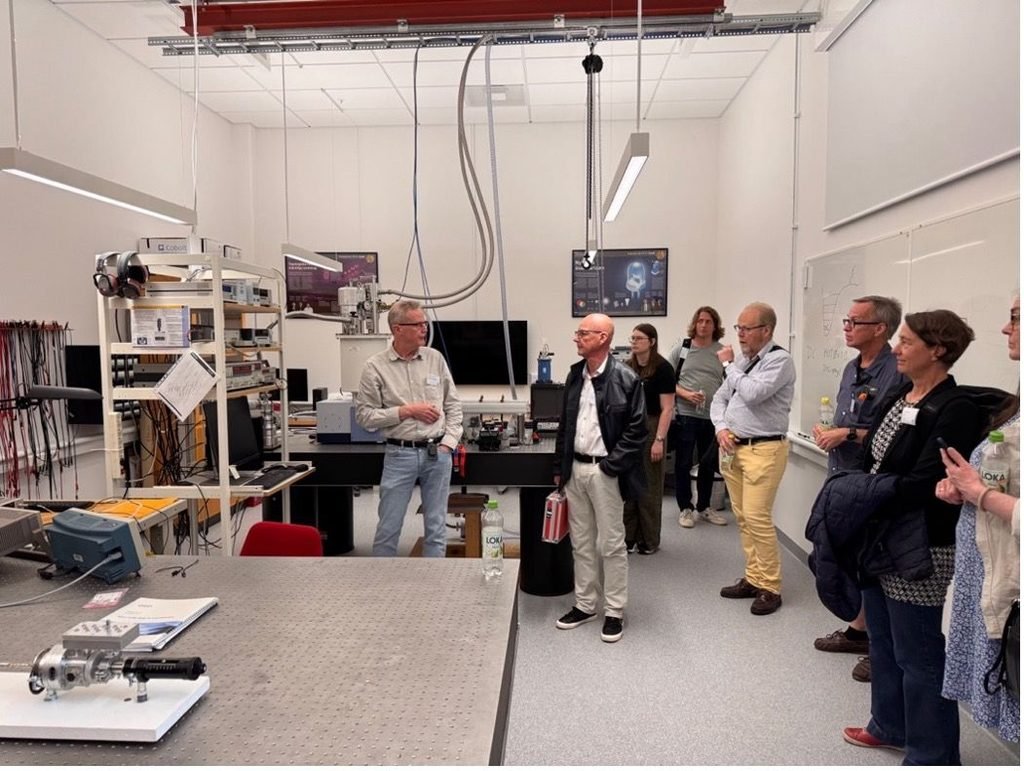
The Electronics Centre in Halmstad (ECH) opened in 2015 as a joint effort between Halmstad University and regional industry. It houses specialised EMC (electromagnetic compatibility) laboratories, including a Maxwell semi-anechoic chamber for radiated emissions and immunity testing. Companies use the facility for pre-compliance testing before certification, working alongside university researchers and students. Three companies backed ECH from early on: HMS Networks, NIBE Energy Systems and AES Nordic. Per-Olof Karlsson, Application Engineer at Rohde & Schwarz commented during a knowledge and inspirational day in Halmstad: “I see a shortage of engineers with EMC knowledge. Halmstad is very well positioned here, helping to close that gap.”
The setup provides an important on-the-ground infrastructure for small and medium-sized electronics companies in the area with access to EMC testing and specialist contacts, without needing labs of their own. Pererik Andreasson, Project Manager and senior lecturer at Halmstad University, describes the everyday reality of the lab: “Here in Halmstad we have companies that come in, work with students and bring real problems with them. Researchers use the lab too, but most engineers don’t become researchers.”
The Rydberg Laboratory: research across disciplines
Another related key laboratory environment at Halmstad University is the Rydberg Laboratory, named after the famous Halmstad-born physicist Johannes Rydberg. The Rydberg Laboratory is the oldest (founded 2004) and largest research lab facility at Halmstad University. It comprises many different lab setups for advanced research in natural sciences and related technical disciplines. The semiconductor labs include state-of-the art equipment for electrical, optical and structural characterization of semiconductor materials and devices. Advanced design, fabrication and characterization of nanoelectronics and photonics is made by researchers, PhD students and MSc students in collaboration with NanoLund at Lund University. The research is funded both internally and externally by e.g. The Swedish Research Council (VR), The Swedish Foundation for Strategic Research (SSF) and Vinnova.
Open doors-laboratories build collaboration and regional strength
Erik-Wilhelm Graef Behm, investment strategist at Invest in Halland, sees the open-lab model as a differentiator: “The laboratories we have that are uniquely open and create a bridge between university, companies and the public, and really set our region apart. Embedded systems and electronics are one of our key focus areas, and it is extremely important for companies to have access to measurement and testing capabilities at this level”. Other laboratories beyond electronics show the same open door policy, including Fab Lab Halmstad that is part of Rydberg’s Laboratotry (where students, researchers, companies and the public can 3D print and scan, try out laser and vinyl cut, work with circuit boards, and more) and the Health Lab – Hälsolabbet (which lets students in nursing, sports science, social work and communication test products and working methods).
A present industry and active exchange
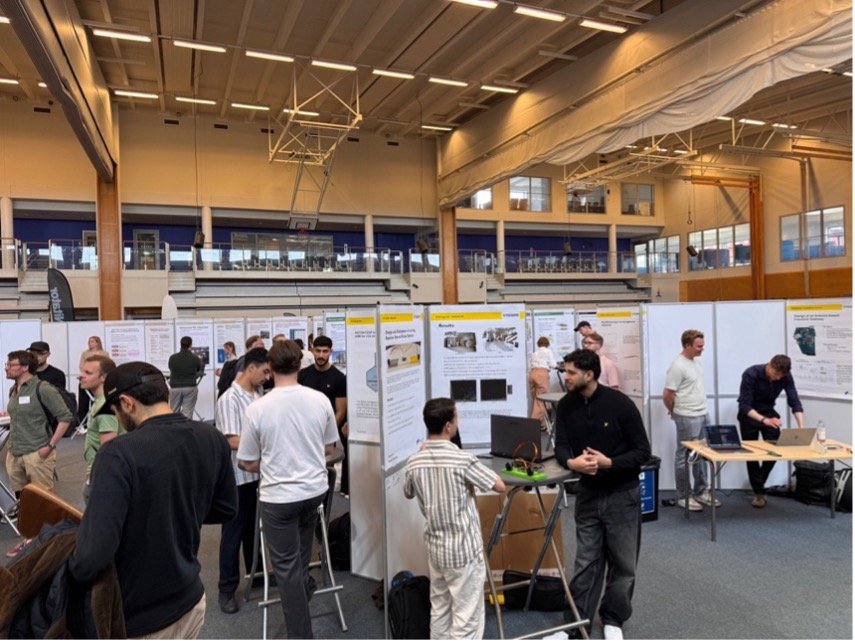
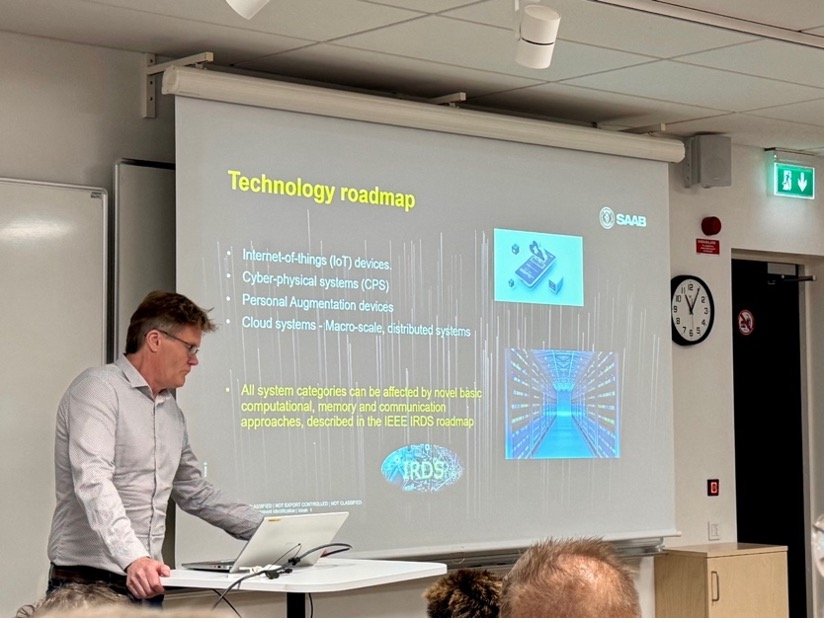
Since 1982 Halmstad University holds a yearly graduation fair, with scholarships awarded for standout work. This year the university held an inspiration and knowledge seminar day in conjunction with the fair. Visitors from the industry who graduated from larger universities remarked on how closely tied to real industry problems many of the students’ thesis work where, comparing with what they’ve seen elsewhere. A comment from an industry representative from defence industry sums up: “The industry is in need of finding people who are curious, having the center and this type of activities supports our ability to find them”.